
Professional, knowledgeable, and clearly knew exactly what they were doing. They explained everything in plain terms and the car felt smoother, more responsive and more powerful afterwards.

Reviews > Guarantee > Dyno Tuning > Buyer Research
Llandow Tuning Reviews – What You Should Know
When searching for Llandow Tuning reviews, it is common to find very positive feedback alongside more critical experiences. This page explains both, with context around vehicle condition, dyno testing, diagnostics and customer expectations.
Review intentBuilt around what people actually search before trusting a tuner.
Balanced informationIncludes process, aftercare, testing and what customers should ask.
Workshop detailFocuses on dyno testing, logging, diagnosis and aftercare.
First Read
Why people search for Llandow Tuning reviews.
When searching for Llandow Tuning reviews, it is common to find a mix of very positive feedback alongside more critical experiences. This can make it difficult to form a clear picture of what to expect. Like many specialist automotive services, vehicle tuning results can vary depending on the condition of the car, the work required, and the expectations of the customer.
This page aims to provide a balanced overview, explaining both the positive experiences reported by customers and the reasons why some reviews may be negative, along with important context about how the tuning industry works.
Most people do not search for tuning reviews because they love reading review sites. They search because they are nervous. A remap changes how an engine makes torque, how a turbo is controlled, how much load a clutch sees and how hard a vehicle is asked to work.
Real-World Context
Real-world factors that affect tuning results.
In practice, no two vehicles behave exactly the same, even when they are the same model. It is common for cars to arrive for tuning with underlying issues that may not be immediately obvious during normal driving.
For example, a vehicle may have a small boost leak, inconsistent injector performance, tired sensors, weak ignition components or carbon build-up that has developed over time. These issues can remain hidden under standard conditions but become much more noticeable once performance is increased.
During proper testing, especially under load, these problems are often revealed. This is one reason some customers report unexpected results after tuning: the process can highlight faults that were already present rather than create new ones.
Overview
What Llandow Tuning is being judged on.
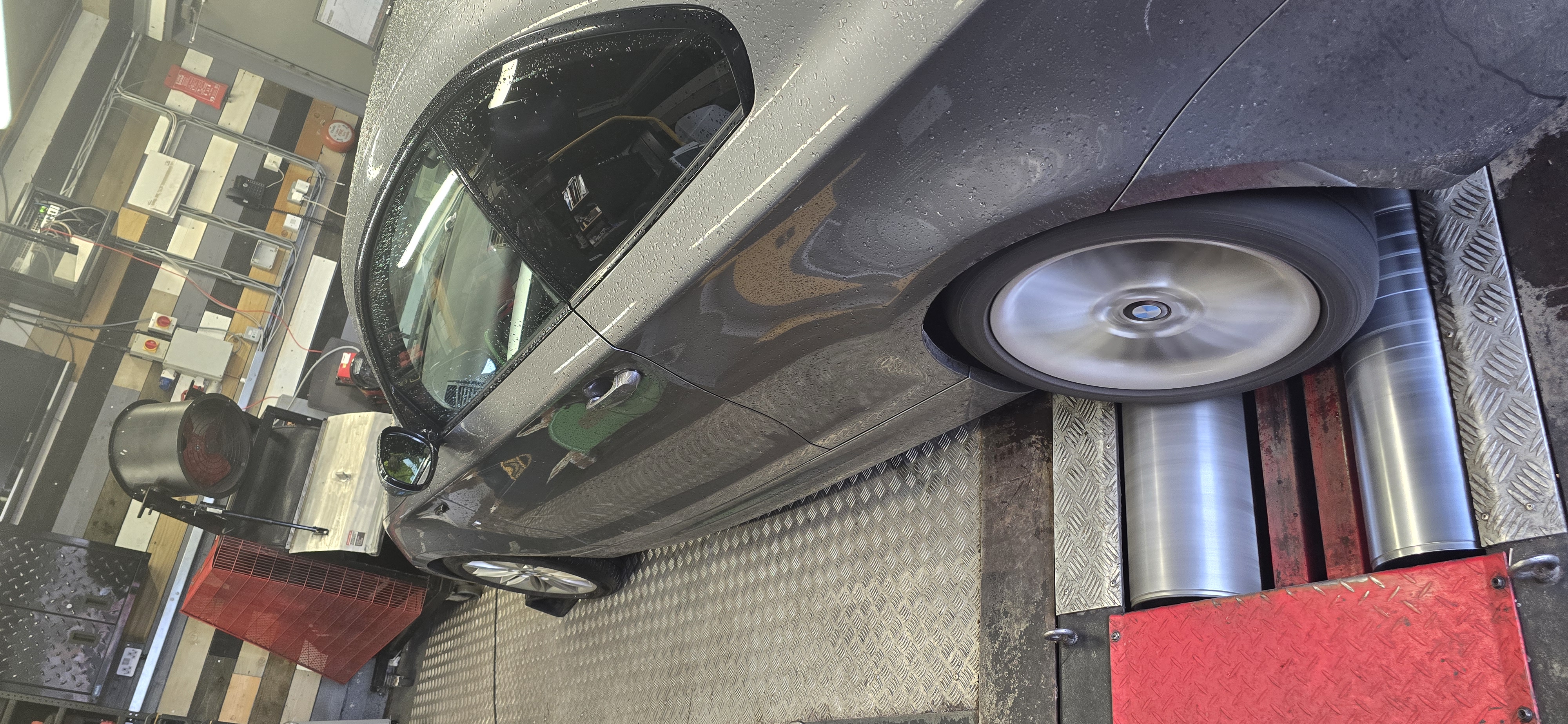
Llandow Tuning is not being judged only on whether a car feels faster after a remap. The stronger test is whether the workshop takes the condition of the vehicle seriously before chasing power.
Useful review signals include whether the tuner checks fault codes, explains dyno results, spots weak clutches or boost faults, gives realistic power expectations and helps when a previous remap has left the car smoking, surging or going into limp mode.
A fair review should recognise that not every problem after tuning is caused by the map. Extra torque can reveal a worn clutch. A dyno run can expose a boost leak. A DPF warning can return if the root cause was never repaired.
Balanced Reviews
What a balanced tuning review should include.
A useful tuning review should give more than a star rating. It should explain the type of vehicle, the mileage, whether the car was standard or modified, and whether it arrived with warning lights, smoke, limp mode, clutch slip or previous software already on the ECU.
It should also mention the process. Was the vehicle checked before tuning? Were diagnostics, live data or dyno validation used? Did the workshop explain any risks or stop when the data suggested a fault? Those details make a review far more useful for someone trying to decide where to book.
The final part is aftercare. If a concern appeared afterwards, a balanced review should explain what happened next: whether the car was invited back, whether the issue was calibration-related, whether an underlying fault was found and what evidence supported that conclusion.
Review Context
Why some reviews of Llandow Tuning are negative.
It is not uncommon to see a mix of positive and negative feedback when researching any vehicle tuning company, and Llandow Tuning is no exception. Understanding why some customers report issues can help provide useful context before drawing conclusions.
Vehicles presented for tuning are not always in perfect mechanical condition. Modern engines often arrive with worn components, boost leaks, injector issues or carbon build-up. While these problems may not always be obvious during normal driving, they can become more noticeable once performance is increased.
Some customers expect a quick transformation or immediate fix to existing performance issues. Responsible tuning often involves diagnostics, testing and sometimes additional work before optimal results can be achieved. This can lead to delays or unexpected outcomes if faults need to be identified first.
Communication can also shape how experiences are perceived. Vehicle tuning is technical, and without a clear understanding of what is involved, misunderstandings can arise around timelines, results or the condition of the vehicle itself.
It is also important to recognise that online reviews often represent extreme experiences. Customers who are particularly satisfied or dissatisfied are more likely to leave feedback, while the majority of routine work carried out successfully may not always be reflected to the same extent online.
For this reason, it is important to view reviews in context. Looking at the type of work carried out, the condition of the vehicle beforehand and the level of testing or diagnostics involved can provide a more balanced understanding of the overall service.
Negative Review Context
What negative reviews do and do not prove.
A negative review can point to a real service issue. Delays, unclear communication, unexpected costs or poor aftercare are all things a cautious buyer should take seriously when researching any tuning company.
At the same time, a negative review can be incomplete without the vehicle history. A car may have arrived with warning lights, previous tuning, worn hardware, boost leaks, injector problems, clutch slip or emissions faults. Without that context, it is hard to know whether the problem was caused by the calibration, revealed by testing, or already developing before the work started.
The most useful reviews mention the car, symptoms, what was requested, what evidence was gathered and how the workshop responded. A vague complaint may still be worth noting, but a detailed complaint is far more useful for deciding what questions to ask before booking.
Tuning Approach
Different approaches to vehicle tuning.
Within the tuning industry, there are different approaches to how calibrations are developed and applied.
Some providers use pre-developed files that have been created and tested on other vehicles, which are then applied across multiple cars with similar specifications. Others take a more vehicle-specific approach, using testing and data analysis to adjust the calibration based on the individual car.
Understanding the difference between these approaches can help explain why results, and customer experiences, can vary significantly. The pages on fake dyno claims and custom tuning vs generic remaps go deeper into that distinction.
Review Themes
What recent positive reviews tend to mention.
Rather than treating reviews as a scoreboard, it is more useful to look for repeated themes. Recent 5-star feedback commonly mentions clear explanations, dyno printouts, quick help, improved drivability, fair pricing and support with previous poor maps or vehicle faults.
Great experience at a good price, including a dyno run and printout so the actual gains could be seen.
Stage 2 Mk6 GTD with supporting mods, smooth linear curve, honest answers, no pressure and proper knowledge and equipment.
Watched the car being tuned on the dyno, had the technician explain the work, and received a dyno printout for proof of bhp and torque figures.
Example Job Write-Up
A useful review should read more like this.
Vehicle: Turbo diesel hatchback used daily, already mapped elsewhere, customer reporting smoke under load and occasional limp mode.
Issue: The customer believed the remap was the only problem. A proper check would also look at boost control, DPF pressure, EGR behaviour, injector correction and stored fault codes.
Process: Read the ECU and fault memory, inspect live data, run controlled testing, check whether the existing file is sensible and stop if temperatures, boost or smoke levels look wrong.
Result: The best outcome is not always more power. Sometimes the correct result is a safer calibration, a repair before tuning, or reverting poor previous software so the vehicle can be diagnosed properly.
Learn More
Learn more about common tuning questions.
Search Intent
Searches this site is designed to answer.
This site is built for cautious searches, not just warm enquiries. If you are comparing workshops, checking complaint claims or trying to understand dyno and remap language, start with the pages below.
Search Paths
Research pages for the questions people actually ask.
These pages are built to answer buyer-intent searches with a calmer, more independent feel.
Is Llandow Tuning any good?A balanced way to judge the workshop.
Looks at process, expectations, reviews, risk and what a good outcome should feel like.
Our guaranteeWhat happens if there is an issue after tuning.Explains return assessment, software fixes, vehicle fault reports and independent inspection.
No depositsNo upfront payment just to hold a booking.If you arrive and decide it is not right before work starts, you are free to leave.
DiagnosticsComplex faults need evidence and realistic budgets.Explains written communication, staged investigation and why some repairs cost more than expected.
How to choose a tunerThe checklist before you book a remap.Questions to ask about diagnostics, dyno claims, generic files, proof and aftercare.
Dyno tuning vs generic remapsWhy the process matters more than the advert.Compares custom calibration, dyno testing, generic files and quick mobile mapping.
Fake dyno claimsWhat dyno proven really means.Explains why proof on the actual car matters more than marketing language.
Compare tunersHow to compare South Wales remap companies.Looks at proof, diagnostics, aftercare and same-as comparison searches.
FAQ
Frequently asked questions.
Is Llandow Tuning any good?
Customer experiences vary. Some reviews are very positive and focus on performance improvements, technical knowledge, and specialist service, while others are more critical and often relate to expectations, communication, or vehicle-specific issues. As with any tuning company, it is important to look at reviews in context.
Why do some tuned cars have problems?
Tuning can expose faults that already existed before the work was carried out. Common examples include boost leaks, inconsistent fuelling, worn components, and carbon build-up. These issues may not be obvious during normal driving but can become more noticeable when performance is increased.
What does dyno proven mean?
Dyno proven usually means a calibration has been tested on a dynamometer. However, that does not always mean the exact file has been tested on the individual vehicle being tuned. It is worth understanding whether the results were verified on that specific car or based on previous testing on another vehicle.
Are all custom remaps really custom?
Not always. In some cases, a file may be pre-developed and then applied to multiple similar vehicles. In other cases, the calibration is adjusted using live data and testing from the individual car. The term custom can therefore mean different things depending on how the tuner works.
Final Thoughts
Understanding the process can change the outcome.
When looking at Llandow Tuning reviews, it is important to consider the wider context of vehicle condition, tuning approach and customer expectations. As with any specialist service, results can vary depending on a number of factors.
Taking the time to understand how tuning is carried out, and what is involved in achieving reliable results, can help ensure a more informed decision and a better overall outcome.
Further Research
More detailed pages for specific concerns.
Most visitors should start with the review guide, guarantee and comparison pages above. If you are specifically researching complaints, bad remap symptoms or dyno failure concerns, these supporting pages go into more detail.
Llandow Tuning complaintsHow to read complaints fairly.
Separates genuine service issues from vehicle condition, previous work and unrealistic expectations.
Complaints explainedContext for negative-review searches.Looks at delays, communication, storage, disputed work and customer protection.
Bad remap symptomsSmoke, limp mode, surging and clutch slip.A practical guide for drivers worried about previous tuning work.
Dyno failure concernsWhat a dyno can reveal before the road does.Explains why controlled load can expose faults that were already developing.